 InspectorData
Home Inspection AI Software in Colorado
Writing inspection reports by hand eats your evenings.
Across Colorado, freeze-thaw cycles, expansive soils, and hail shape what inspectors find — and what insurers ask for. InspectorData helps you document and report it faster.
Colorado does not require a state license; certification is common.
In Colorado, 4-point inspections come up often — and InspectorData includes templates for them with AI photo analysis built in.
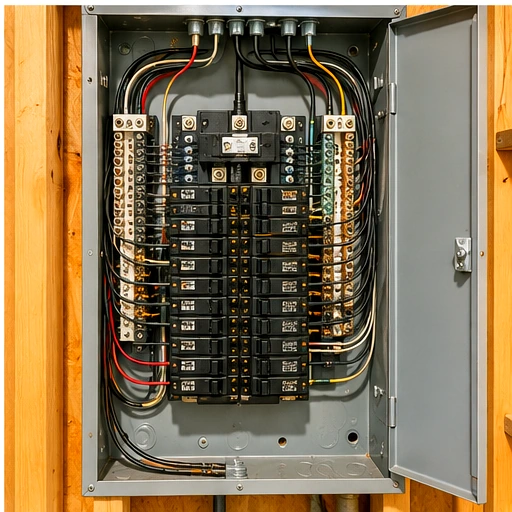
Colorado does not license or register home inspectors at the state level (licensing bills have repeatedly failed), so the profession runs on voluntary InterNACHI/ASHI certification — in a state where very high radon, expansive bentonite clay soils, 'Hail Alley' roof damage, and wildfire risk make inspections especially consequential.
Does Colorado license home inspectors?
No. Colorado has no state license or registration for home inspectors, and legislative attempts to create one — including SB17-038 in 2017 and a DORA initiative in 2019 — failed.
Reputable Colorado inspectors instead hold voluntary certification through InterNACHI or ASHI, which is strongly recommended even though it is not legally required.
Standards of practice and continuing education
With no state standard, Colorado inspectors typically follow the InterNACHI or ASHI Standards of Practice — a non-invasive, visual examination of accessible areas covering roof, exterior, foundation and structure, heating, cooling, plumbing, electrical, fireplace, attic and insulation, and interior. There is no state continuing-education mandate; CE comes through association membership.
The inspections Colorado buyers actually need
Radon testing is in very high demand statewide and is commonly bundled with the general inspection. Roof inspections are heavily emphasized because of hail, and foundation and structural-floor inspections are critical given expansive soils.
Climate and regional inspection drivers
Expansive bentonite clay is Colorado's most significant geologic hazard — Front Range clays can swell substantially and exert enormous pressure, causing foundation heave and cracked basement floors, which is why drilled piers and suspended structural floor systems are common. Inspectors evaluate those engineered foundation details closely.
The Front Range sits in 'Hail Alley' with the highest large-hail frequency in North America, making roof condition a priority and hail the leading insurance-loss driver. Radon is extreme — roughly half of Colorado homes exceed the EPA action level and about three-quarters of the state is in Zone 1 — and Front Range growth into the wildland-urban interface adds wildfire-hardening considerations.
Housing stock
Colorado has among the newest housing stock in the nation amid strong Front Range growth. Much of that newer stock sits on engineered foundations responding to expansive soils — drilled piers and suspended structural floors over crawlspaces — which inspectors must evaluate for movement and void/expansion details.
How InspectorData helps Colorado inspectors
- ✓AI photo analysis auto-categorizes foundation, structural-floor, roof, and hail-damage photos by system and drafts the comments.
- ✓Keeps every report consistent with your InterNACHI or ASHI standard.
- ✓Documents expansive-soil, hail, and radon-entry findings fast — photos in, finished draft out.
- ✓Flat $69.99/mo with a 90-day free trial — no per-report or per-inspection fees.
Colorado associations & continuing education
Home inspection in Colorado: FAQ
- Do home inspectors have to be licensed in Colorado?
- No. Colorado has no state license or registration for home inspectors, and legislative attempts (SB17-038 in 2017; a DORA initiative in 2019) failed. Reputable inspectors hold voluntary InterNACHI or ASHI certification.
- Should I get a radon test with my Colorado home inspection?
- Yes — about half of Colorado homes exceed the EPA action level of 4.0 pCi/L, the state average is well above the U.S. average, and roughly 75% of the state sits in EPA Zone 1.
- Why do Colorado inspectors focus so much on foundations and roofs?
- Expansive bentonite clay is the state's leading geologic hazard, driving foundation heave and the use of drilled piers and structural floor systems, while the Front Range 'Hail Alley' makes roof condition a top priority.
Sources
- https://getlicensemap.com/states/home-inspector/colorado
- http://leg.colorado.gov/bills/sb17-038
- https://cdphe.colorado.gov/press-release/half-of-colorado-homes-have-elevated-radon-levels-which-can-cause-lung-cancer
- https://coloradogeologicalsurvey.org/hazards/expansive-soil-rock/
- http://www.rmiia.org/catastrophes_and_statistics/Hail.asp
Last verified: 2026-05-27
Frequently asked questions
- What is AI photo analysis in home inspection software?
- AI photo analysis uses artificial intelligence to look at inspection photos, auto-categorize each by home system, and generate a professional defect comment — turning hours of report writing into minutes.
- Does InspectorData really analyze my photos with AI?
- Yes. InspectorData is the only home inspection software with true AI photo analysis that auto-categorizes photos and drafts comments, for $69.99/month flat.
Cities in Colorado
Get your evenings back.
Start your 90-day free trial — no credit card.
Start free trial