 InspectorData
Home Inspection AI Software in District of Columbia
Writing inspection reports by hand eats your evenings.
Across District of Columbia, humidity, urban density, and older housing stock shape what inspectors find — and what insurers ask for. InspectorData helps you document and report it faster.
Washington, D.C. does not require a home-inspector license; certification is standard.
In District of Columbia, 4-point inspections come up often — and InspectorData includes templates for them with AI photo analysis built in.
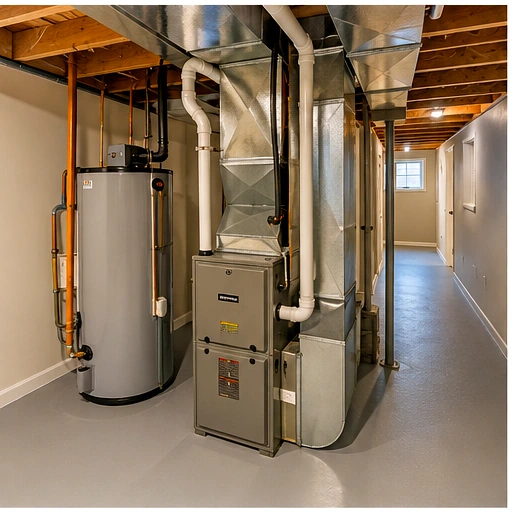
Washington, D.C. does not license or regulate home inspectors — voluntary InterNACHI/ASHI certification is the de facto standard — in a market dominated by very old historic rowhouses with party walls, lead paint, dated wiring, damp cellars, EPA Zone-2 radon, and rising urban flash-flood risk.
Does D.C. license home inspectors?
No. The District of Columbia has no home-inspector license, exam, or regulatory board — anyone may perform inspections, and voluntary InterNACHI or ASHI certification is the trust signal. (Operating an inspection business still requires a general DC Basic Business License, but that is a business registration, not an inspector license.) There is no DC continuing-education mandate.
Standards of practice
With no DC standard in statute, inspectors adopt the InterNACHI or ASHI Standards of Practice as the de facto benchmark — covering roof, structure, electrical, plumbing, HVAC, exterior, interior, and insulation/ventilation — with radon, pest/WDO, lead, and mold typically handled as separate, ancillary services.
The inspections D.C. buyers actually need
Driven by the very old rowhouse stock, high-demand add-ons include radon testing, lead-based-paint assessment (most pre-1978 stock, with federal disclosure required), moisture and basement/cellar evaluation, knob-and-tube and dated-electrical assessment, and party-wall condition — a recurring DC-specific concern given shared-wall responsibilities.
Climate and regional inspection drivers
D.C.'s humid subtropical climate brings hot, humid summers and freeze-thaw winters, driving moisture intrusion, mold, and masonry/foundation stress. Outdated stormwater systems make urban flash flooding frequent — roughly 18% of DC properties carry flood risk over 30 years — and the city sits on the Potomac near rising sea levels.
The EPA classifies D.C. as radon Zone 2 (moderate), and the DC Department of Energy and Environment recommends testing every home against the 4 pCi/L action level and offers free radon test kits.
Housing stock
D.C. has among the oldest housing stock in the country, dominated by historic attached rowhouses — most renovation-grade rowhouses were built roughly 1890 to 1930. Party-wall (shared masonry wall) construction is the signature local feature, with unique inspection and legal considerations, and the largely pre-1950 stock means lead paint, knob-and-tube or 60-amp electrical, older heating, and damp cellars are baseline expectations.
How InspectorData helps D.C. inspectors
- ✓AI photo analysis auto-categorizes rowhouse, old-wiring, and cellar-moisture photos by system and drafts the comments.
- ✓Keeps every report consistent with your InterNACHI or ASHI standard.
- ✓Documents party-wall, lead-era, and flood findings fast — photos in, finished draft out.
- ✓Flat $69.99/mo with a 90-day free trial — no per-report or per-inspection fees.
District of Columbia associations & continuing education
Home inspection in District of Columbia: FAQ
- Do I need a license to be a home inspector in Washington, D.C.?
- No. D.C. has no home-inspector license, exam, or CE requirement; you only need a general DC Basic Business License to operate a business.
- Is radon a concern in D.C.?
- Yes — D.C. is EPA Zone 2 (moderate potential). The Department of Energy and Environment recommends testing every home against the 4 pCi/L action level and provides free test kits.
- What's unique about inspecting D.C. rowhouses?
- Most are old (largely pre-1950) party-wall masonry rowhouses with shared-wall legal considerations, frequent lead paint, knob-and-tube or 60-amp wiring, and damp basements and cellars.
Sources
- https://www.ahit.com/become-home-inspector/license-requirements/dc-state-regulations/
- https://dlcp.dc.gov/service/business-licensing-division
- https://doee.dc.gov/radon
- https://www.nachi.org/washingtondc
- https://www.weather.gov/safety/flood-states-dc
Last verified: 2026-05-27
Frequently asked questions
- What is AI photo analysis in home inspection software?
- AI photo analysis uses artificial intelligence to look at inspection photos, auto-categorize each by home system, and generate a professional defect comment — turning hours of report writing into minutes.
- Does InspectorData really analyze my photos with AI?
- Yes. InspectorData is the only home inspection software with true AI photo analysis that auto-categorizes photos and drafts comments, for $69.99/month flat.
Cities in District of Columbia
Get your evenings back.
Start your 90-day free trial — no credit card.
Start free trial