 InspectorData
Home Inspection AI Software in Texas
Writing inspection reports by hand eats your evenings.
Across Texas, heat, expansive clay soils, and foundation movement shape what inspectors find — and what insurers ask for. InspectorData helps you document and report it faster.
Texas licenses home inspectors through TREC and requires the TREC-standard report form.
In Texas, 4-point inspections come up often — and InspectorData includes templates for them with AI photo analysis built in.
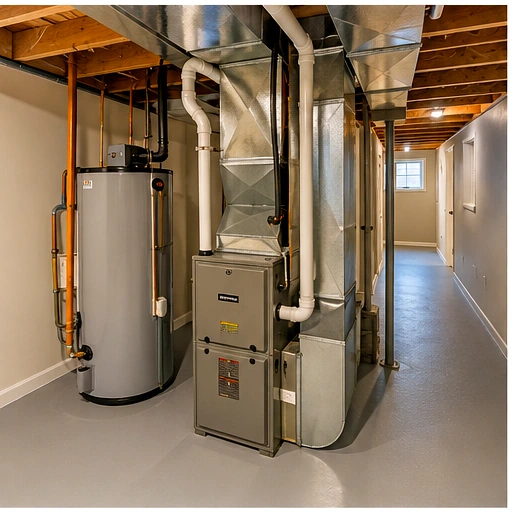
Texas licenses home inspectors through TREC at three tiers, requires the standard REI 7-6 report form for 1–4 family homes, and its inspections are dominated by expansive-clay slab foundations, Gulf Coast windstorm rules, and 'Hail Alley' storm damage.
Is a license required to inspect homes in Texas?
Yes. The Texas Real Estate Commission (TREC) licenses home inspectors at three tiers — Apprentice Inspector, Real Estate Inspector, and Professional Real Estate Inspector. Apprentice and Real Estate inspectors work under a sponsoring Professional Inspector; the Professional tier needs no sponsor.
Licensure requires TREC-approved qualifying education, passing the Texas Real Estate Inspector Exam plus the National Home Inspector Examination (NHIE), and filing proof of E&O insurance of at least $100,000 per occurrence (22 TAC §535.211). Licenses renew every two years.
Continuing education
Texas inspectors complete 32 hours of continuing education per two-year renewal, which must include the 8-hour Inspector Legal & Ethics and Standards of Practice Review course. No more than 16 hours are credited for any single subject.
Standards of practice and the REI 7-6 report
TREC's Standards of Practice are codified in 22 Texas Administrative Code, Chapter 535, Subchapter R (§§535.227–535.233), covering structural, electrical, HVAC, plumbing, appliances, and optional systems such as pools and sprinklers.
Since February 1, 2022, the promulgated report form REI 7-6 is required for all real estate inspections of 1–4 family residential property — so Texas reports follow a consistent, state-mandated format.
The inspections Texas buyers actually need
Foundation evaluation is the signature Texas concern because of expansive clay soils under predominantly slab-on-grade homes (see climate). Wood-Destroying Insect (WDI/termite) reports are also common and lender-driven, performed by a separately licensed pest professional on the Texas Department of Agriculture or NPMA-33 form.
Climate and regional inspection drivers
Much of Texas — especially DFW, Houston, and San Antonio — sits on expansive 'swelling' clay (USGS Map I-1940). The soil's wet-dry shrink-swell cycle drives differential and seasonal foundation movement, the most-cited structural finding in the state.
DFW sits in 'Hail Alley,' and Texas regularly leads the nation in hail events, tying directly to roof, gutter, and cladding findings. Gulf Coast hurricanes (e.g., Harvey, 2017) drive wind-rated roof/opening and flood/grading concerns along the coast.
Housing stock
Texas housing skews newer than the national median (a fast-growing Sun Belt state), and slab-on-grade is the predominant foundation type across its metros — which is exactly why expansive-clay slab movement is the leading structural concern.
Coastal windstorm rules
Properties in the 14 first-tier Gulf Coast counties (and part of Harris County) generally need a Windstorm Certificate of Compliance (WPI-8, or WPI-8-C when a licensed engineer certifies) to be eligible for Texas Windstorm Insurance Association (TWIA) coverage — a separate process from the TREC home inspection.
How InspectorData helps Texas inspectors
- ✓AI photo analysis auto-categorizes foundation, roof, and hail-damage photos by system and drafts the comments.
- ✓Speeds the REI 7-6 workflow — turning field photos into a finished report in minutes.
- ✓Documents expansive-clay foundation movement and storm damage consistently across every report.
- ✓Flat $69.99/mo with a 90-day free trial — no per-report or per-inspection fees.
Texas associations & continuing education
Home inspection in Texas: FAQ
- Do home inspectors have to be licensed in Texas?
- Yes — TREC licenses inspectors at three levels: Apprentice, Real Estate Inspector, and Professional Real Estate Inspector, each requiring approved education, exams, and proof of E&O insurance.
- What inspection report form is used in Texas?
- TREC's standard REI 7-6 form, required for all 1–4 family residential inspections since February 1, 2022. It covers structural, electrical, HVAC, plumbing, appliances, and optional systems.
- Why are foundation inspections such a big deal in Texas?
- Most Texas homes sit on slab-on-grade foundations over expansive clay soil; the soil's shrink-swell cycle causes seasonal foundation movement, the most common structural finding in Dallas, Houston, and San Antonio.
Sources
- https://www.trec.texas.gov/become-licensed/inspector
- https://www.trec.texas.gov/renew-license/inspector
- https://www.trec.texas.gov/forms/inspection-report-form
- https://www.law.cornell.edu/regulations/texas/22-Tex-Admin-Code-SS-535-211
- https://pubs.usgs.gov/publication/i1940
- https://www.tdi.texas.gov/wind/generalquestio.html
Last verified: 2026-05-27
Frequently asked questions
- What is AI photo analysis in home inspection software?
- AI photo analysis uses artificial intelligence to look at inspection photos, auto-categorize each by home system, and generate a professional defect comment — turning hours of report writing into minutes.
- Does InspectorData really analyze my photos with AI?
- Yes. InspectorData is the only home inspection software with true AI photo analysis that auto-categorizes photos and drafts comments, for $69.99/month flat.
Cities in Texas
Get your evenings back.
90 days free. Cancel anytime.
Start free trial